
2026 · Punchcard’s Annual Research Report
The State of AI at Work in Canada
Explore how Canadian workers use AI, with a closer look at heavy industries, rework, trust and employer support.
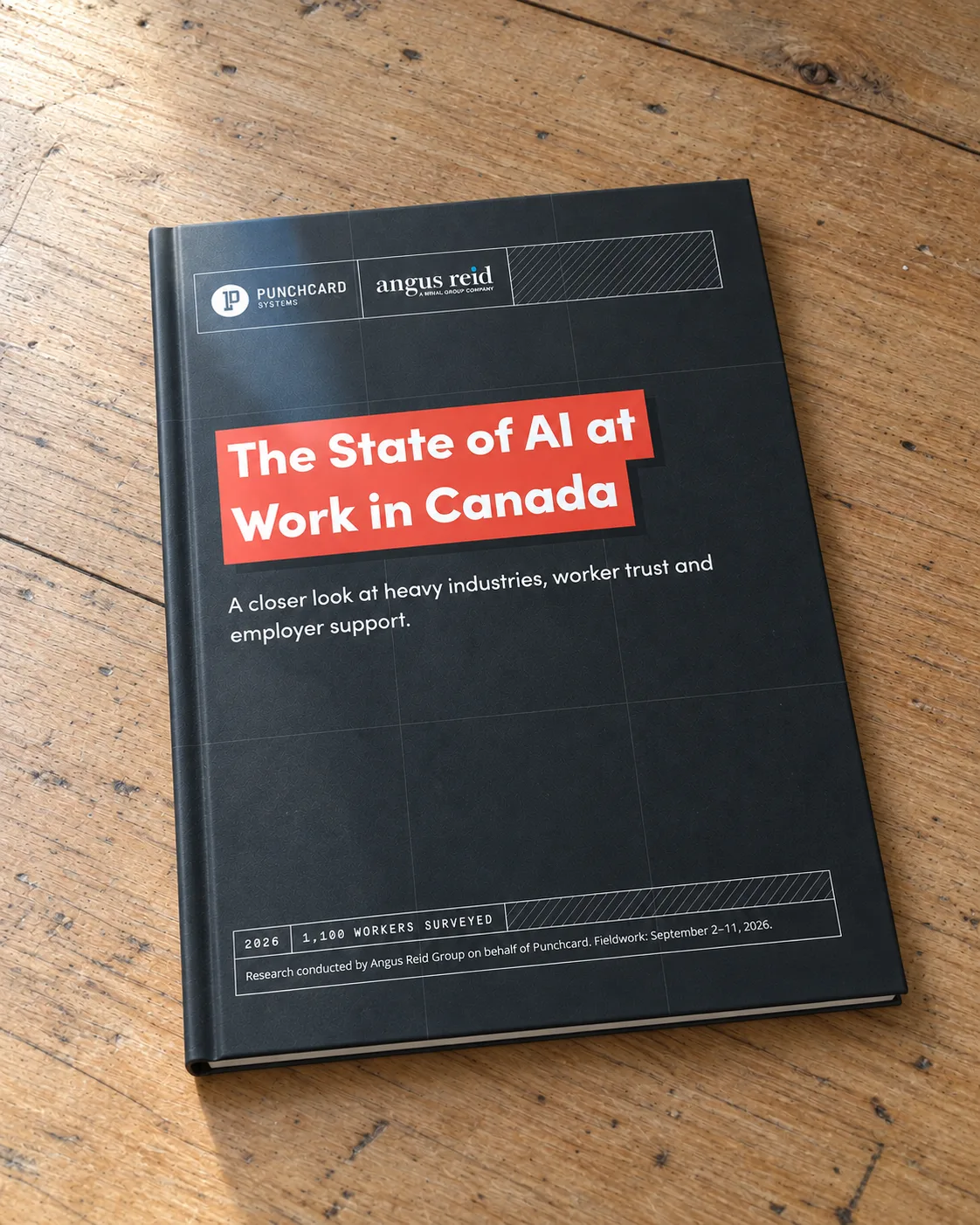


AI in the workplace: what we found
Productivity
Does AI save time at work? For some, but not everyone
Across industries, 65% of AI users answering the question report saving time, while 35% report none. Those who save time estimate an average of 6.1 hours a week.
Roles
How AI is changing people’s jobs
AI takes on some tasks and adds new ones, like checking the work it produces.
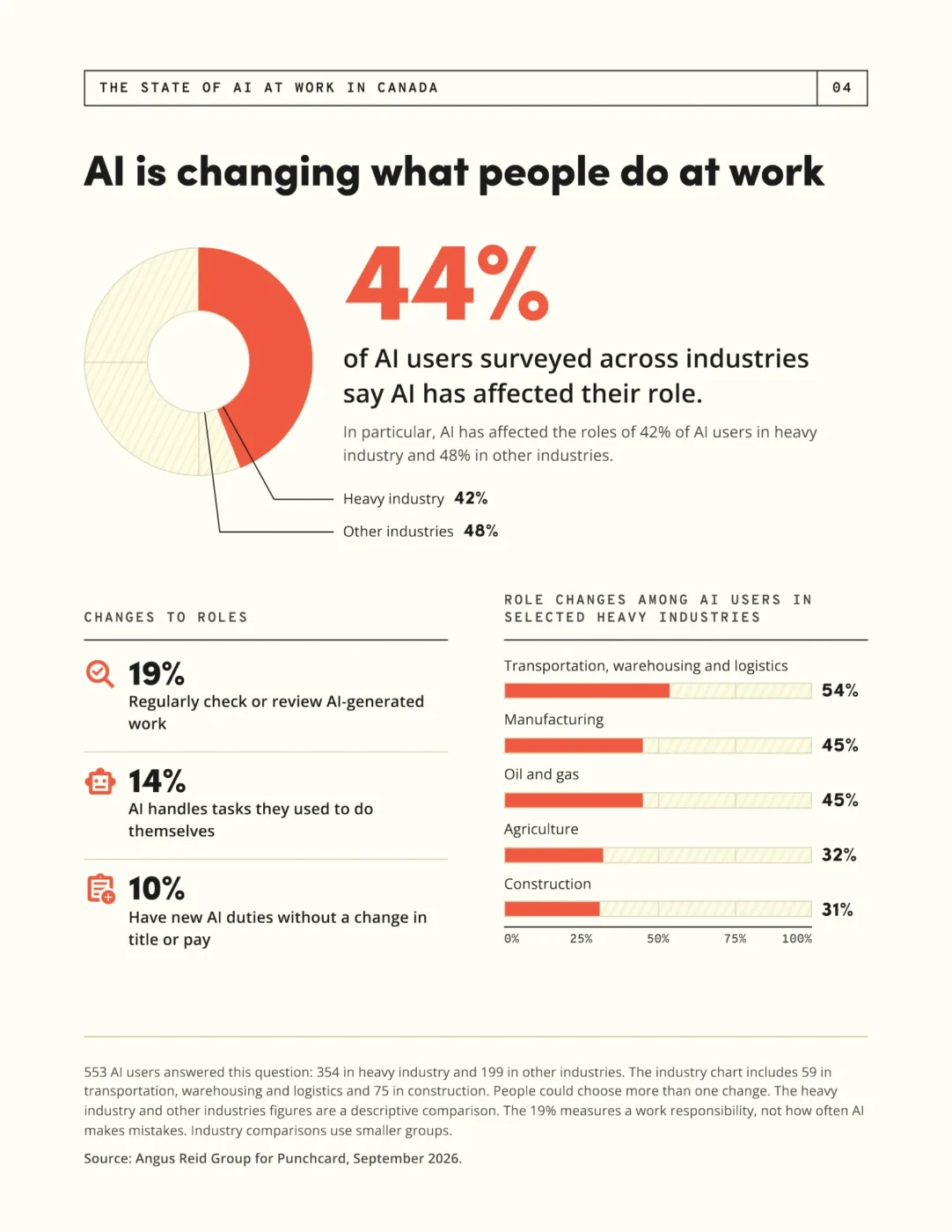
44%
of AI users surveyed across industries say AI has affected their role.
19%
of AI users regularly check or review AI’s work.
By industry
AI in manufacturing, construction and other heavy industries
AI’s impact varies by industry. More than half of AI users in transportation and logistics say it has affected their role. In agriculture and construction, it’s fewer than a third. Manufacturing and oil and gas fall in between.
Trust
Can workers trust AI? In heavy industry, trust often means checking
Most heavy-industry AI users trust AI with paperwork and routine information, as long as a person checks the output. Far fewer trust it with decisions that affect worker safety.
Completely With review
Support
68% of heavy-industry workers report no formal AI support
Formal support includes AI training for employees, approved tools, written rules and someone to ask for help. Informal discussions may still take place.
Errors
When AI output causes problems at work
Among AI users surveyed across industries, 24% report catching errors before they caused a problem, while 18% report a minor or serious problem. This includes 3% who report a serious problem, such as a safety incident or financial loss.
18%
of AI users say AI output caused a problem at work.
24%
of AI users caught AI errors before they caused a problem.

Inside the report
What else is in the full report
The report goes beyond the highlights on this page. It includes:
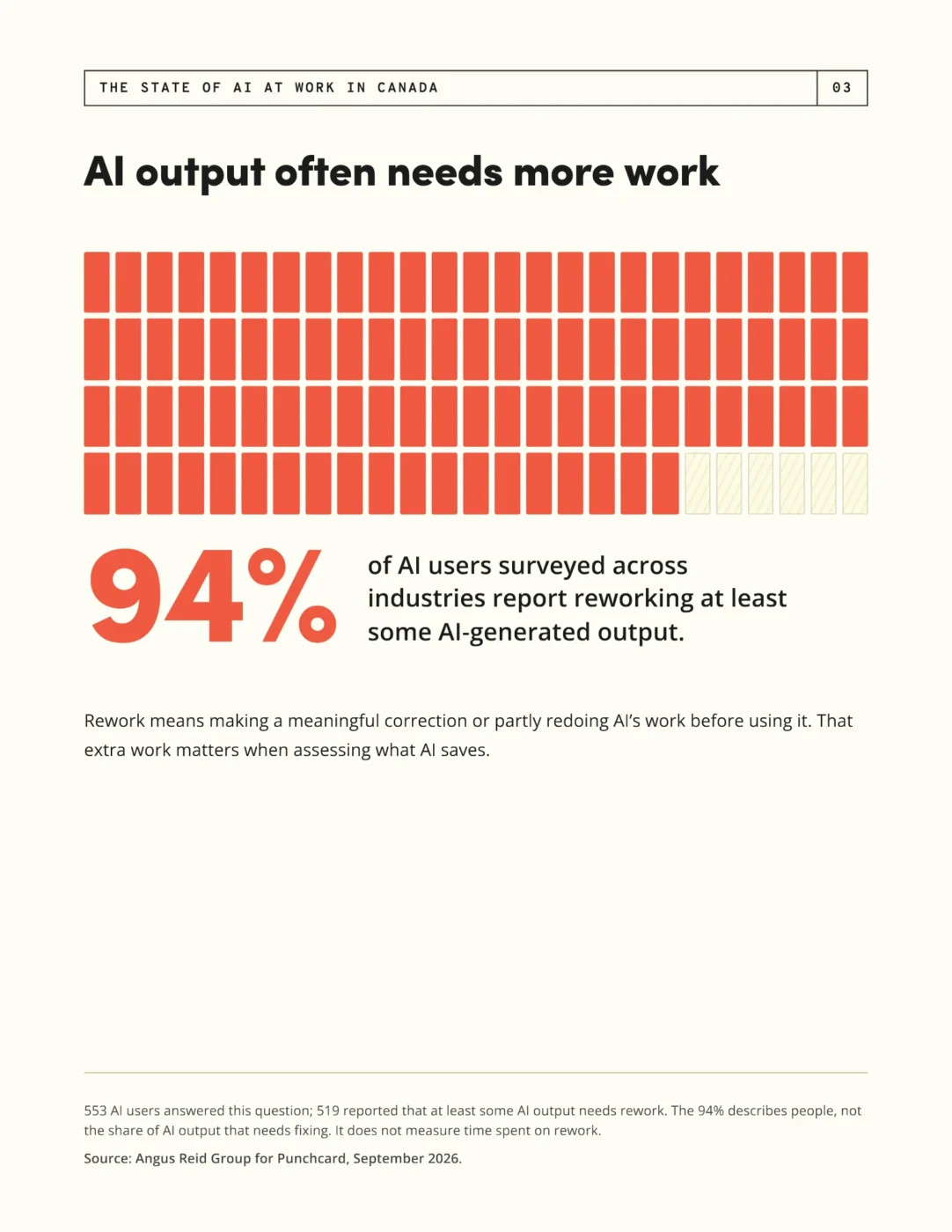
- How much AI output needs rework, from none of it to all of it.
- Trust across all eight heavy-industry tasks, including Canadian codes and standards and equipment troubleshooting.
- Which AI tools workers use, from chatbots to AI built into machinery.
- Every role change, including new AI duties with no change in title or pay.
- AI support compared across seven heavy industries.
- A letter from our Managing Partner on where leaders should start.
About the research
Angus Reid Group surveyed 1,100 working Canadians for Punchcard from September 2–11, 2026. Respondents were members of the Angus Reid Forum who work full-time, part-time, for themselves or on contract. The survey included extra recruitment in heavy industries: manufacturing, construction, natural resources, utilities, automotive and agriculture. Results are self-reported and reflect one point in time.


If there’s one thing I’d ask leaders to take from this report, it’s to start with your people rather than the platform.
Which of these sounds most like your business?
Pick the one that sounds most familiar to see how we can help.
Getting started
We want to use AI but need some guidance
You’re not sure where to start, or you’ve tried tools like Copilot and your team isn’t getting much from them.
Improving how we work
We spend too much time on repetitive tasks
Your team keeps copying information, chasing approvals or sorting through documents. You want to make that work easier.
Building something new
We need an AI tool built for our business
You want a tool that does a specific job for your staff or customers, or you want to add AI to software you already use.
Talk to our team
"*" indicates required fields
